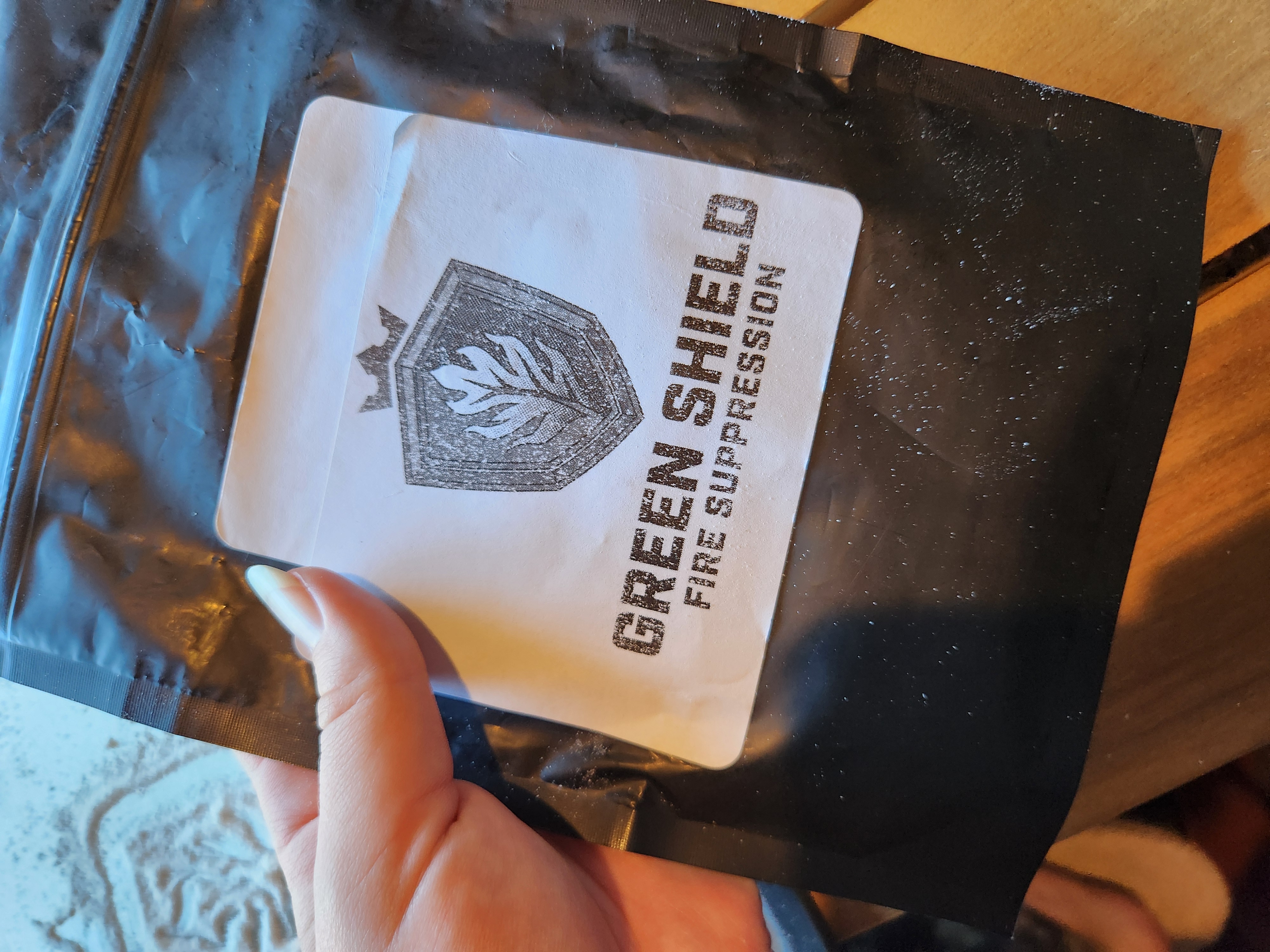
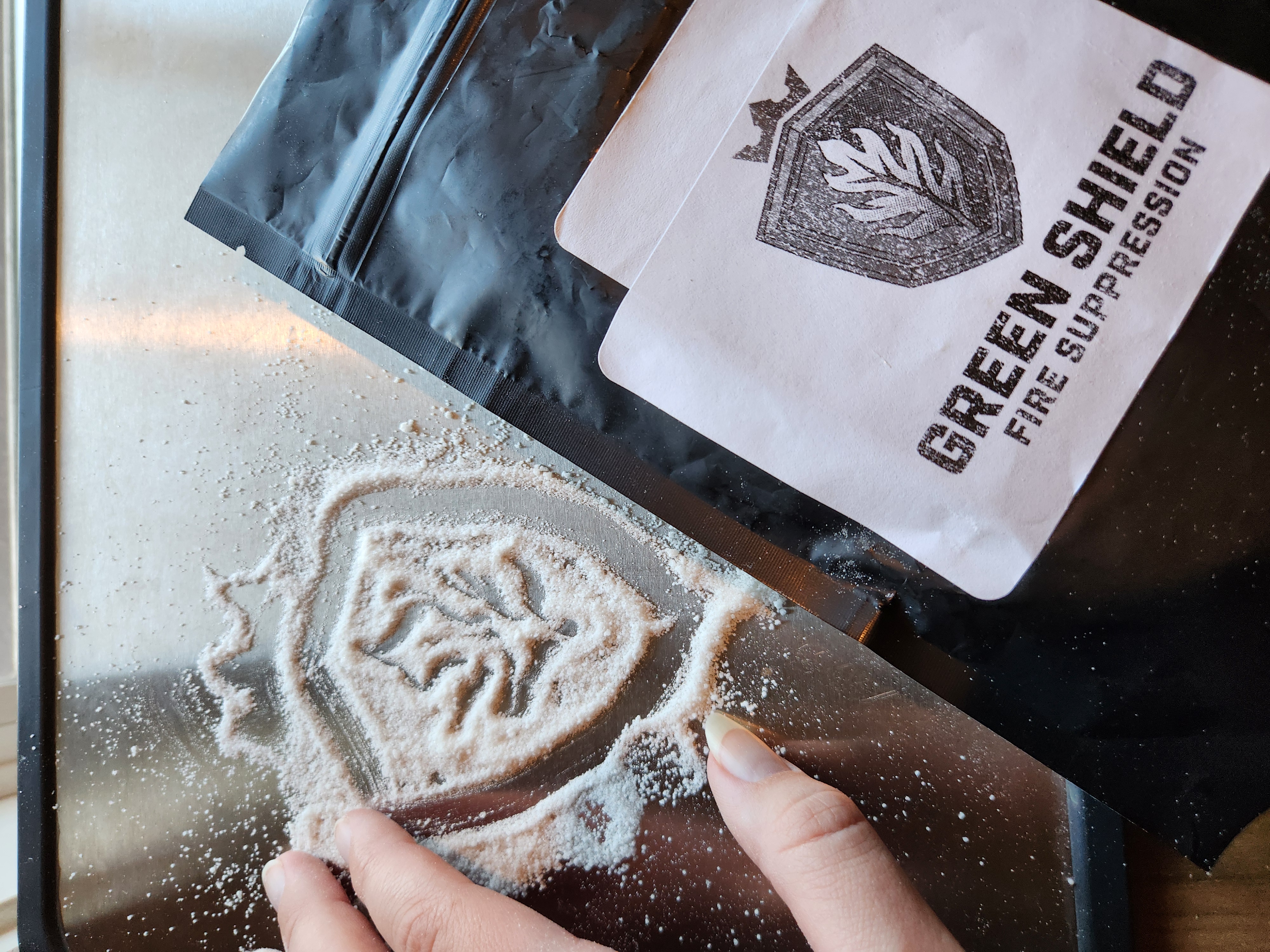
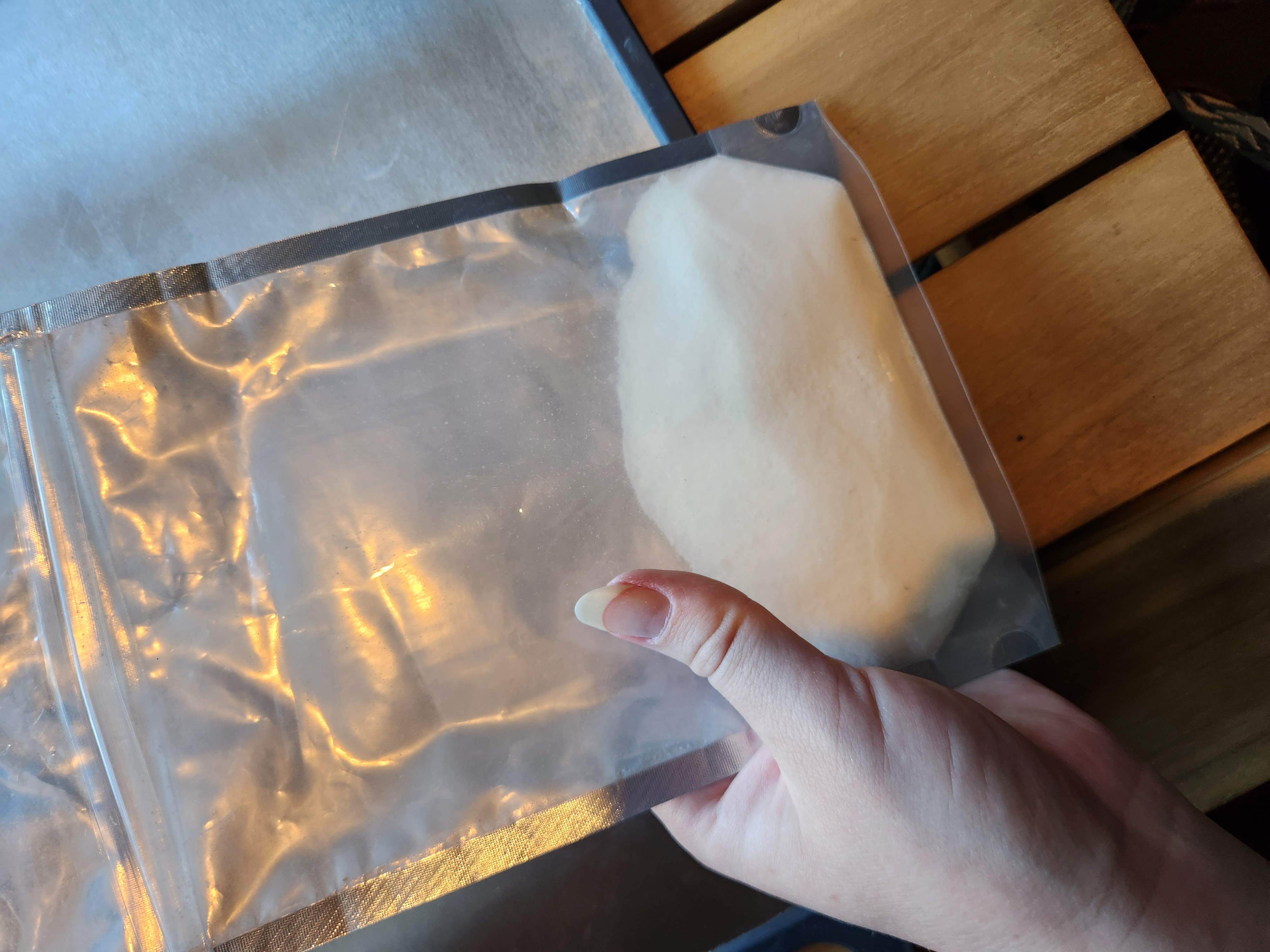
Green Shield Fire | Fire Suppression - Bio-based, lightweight powder which forms an eco-friendly plant-derived hydrogel used as fire barrier designed to protect people, property, and ecosystems without harmful forever chemicals.
As wildfire intensity increases worldwide, ecosystems and communities are being exposed to growing volumes of dangerous fire suppression chemicals. At the same time, awareness surrounding firefighter health and PFAS contamination continues to rise.
Regulatory pressure surrounding forever chemicals is reshaping the future of fire suppression. The industry is moving toward cleaner, biologically responsible systems.
Green Shield Fire is exploring renewable hydrogel systems derived from marine biomaterials designed to retain moisture, reduce ignition spread potential, and minimize ecological burden.
Millions of Americans want solutions the EPA responds:
EPA leadership is actively discussing PFAS alternatives.
Safe solutions now.
Marine biomaterials naturally retain moisture and offer promising environmentally conscious hydrogel applications for fire response and future ecological restoration systems.
Trinity built Green Shield Fire as a next-generation fire suppression system designed to be faster to deploy, safer for firefighters, and fundamentally non-toxic to the environment, replacing legacy chemical suppression with a regenerative, ecosystem-compatible approach.
Maximizing firefighter safety and protecting lives in extreme fire conditions.
Reducing time, friction, and logistics across suppression deployment.
Preventing long-term ecological damage while enabling recovery.
Designing fire suppression for long-term ecological stability rather than short-term suppression alone.
Fire protection without the toxic chemistry experiment? Yep. Also, why we’re obsessed with seaweed. From firefighters and environmental advocates to investors and researchers — everyone is asking us about Green Shield Fire the seaweed-based fire suppression systems.
Green Shield Fire was designed with a different goal in mind. While many commercial fire gels focus mainly on holding water, Green Shield Fire uses a bio-composite approach aimed at longer-lasting protection, environmental responsibility, and simplified deployment.
Unlike many conventional gels, Green Shield Fire Hydrogel Bio-Matrix is being developed around a multi-layered thermal defense concept that may include:
Green Shield Fire was developed and filed patent pending as a next-generation fire protection system designed to move beyond conventional “water gel” technologies.
Many polymer-based and silica-enhanced fire gels can come with significant trade-offs.
Green Shield Fire was specifically developed to explore a more sustainable and operationally practical alternative.
Green Shield Fire Bio-Matrix was developed to prioritize sustainability, deployability, and long-term environmental responsibility alongside fire protection performance.
The system is being developed as a practical field-ready alternative designed for both wildfire response and broader fire protection applications.
Yes.
Green Shield Fire is being developed as a non-toxic, PFAS-free, and fully biodegradable fire suppression alternative designed to avoid persistent synthetic chemicals associated with some legacy firefighting products.
Green Shield Fire is designed for straightforward deployment using existing firefighting infrastructure and equipment.
The dry concentrate is intended to mix with water and integrate into existing response workflows with minimal additional training requirements.
Green Shield Fire is specifically being engineered for strong adhesion and reduced slumping on vertical and inclined surfaces.
This addresses a common limitation found in many traditional water-based gels where material runoff can reduce protective coverage during extreme heat exposure.
Comprehensive testing is planned across multiple high-intensity fire scenarios, including:
The goal is to evaluate performance across both wildfire and structural fire protection applications.
Green Shield Fire is being developed for:
The system is intended to align with evolving EPA and state environmental standards focused on safer firefighting materials and reduced ecological impact.
Final pricing is still being evaluated, but Green Shield Fire is being designed to reduce long-term operational costs through:
The long-term goal is to provide both environmental and operational cost advantages compared to many synthetic gel systems.
The Green Shield Fire dry concentrate formulation is being engineered for strong shelf stability and simplified storage.
This makes the system practical for:
Many conventional fire gels primarily focus on holding water but can involve higher costs, difficult cleanup, and environmental trade-offs.
Green Shield Fire focuses on combining effective fire protection with real-world operational practicality and environmental responsibility:
The goal is not simply to create another fire gel — but to develop a smarter and more sustainable fire protection platform.
Seaweed is one of the fastest-growing renewable biomaterials on Earth. It grows without freshwater, fertilizer, or agricultural land. Because Mother Nature already solved half the problem. Seaweed is one of the fastest-growing, most renewable materials on Earth. It grows without fertilizer, doesn’t need fresh water, and can grow up to two feet per day. Also, unlike legacy fire retardants, seaweed has never been accused of sounding like a villain in a chemistry documentary.
More importantly, watch the video. Our seaweed polymers are tested to naturally retain moisture like a sponge. Green Shield Fire is food quality advanced thermal moisture barrier. Green Shield uses that property to create a thermal moisture barrier that stays in place longer than plain water. Think of it as nature’s fire blanket — only less itchy.
Surprisingly, no.
Traditional fire retardants depend on expensive chemical manufacturing, volatile supply chains, specialized storage, and environmental cleanup costs.
Green Shield is built on sustainable, food-grade and biodegradable products. Preliminary projections suggest production costs could be 50% less than current chemical products. This would dramatically reduce toxins and cost.
Translation: less money spent on hazardous chemistry, more money spent protecting firefighters and forests.
Green Shield is a proprietary blend of sustainably harvested seaweed polymers and food-grade biodegradable stabilizers.
Because we are actively protecting our intellectual property, we don’t disclose exact concentrations. But we can say this:
Every ingredient is selected with human safety and environmental responsibility in mind.
Many people simply do not know about the environmental and health risks tied to modern firefighting materials. We didn’t either until we learned about PFAS.
PFAS have been used in much firefighter protective gear, and even PFAS-free gear can still be exposed to chemical-based fire suppression agents that may contain carcinogens or other harmful substances.
Firefighters and agencies care deeply about protecting people, land, air, water, and wildlife. The first step toward safer solutions is awareness.
Cancer is bad. PFAS contamination and firefighter exposure concerns are driving industry-wide discussions around safer suppression alternatives.
WHY NOW? Learn what the EPA is saying about PFAS:
EPA leadership is actively discussing PFAS alternatives.
Watch EPA Administrator Lee Zeldin discuss the urgency surrounding PFAS and safer future solutions.
Seaweed is among the most scalable renewable biomaterials available and can be cultivated sustainably while also contributing to carbon sequestration.
That’s one of the reasons seaweed is so exciting. It’s one of the most scalable renewable biomaterials on Earth.
Unlike mined chemical ingredients, seaweed cultivation can expand sustainably while also sequestering carbon during growth.
In other words: the raw material grows itself. Nature really overachieved on this one.
That’s exactly what the hydrogel is built to do. Unlike plain water, which evaporates rapidly, Green Shield forms a sacrificial moisture barrier.
In preliminary torch testing, the outer layer chars while helping trap moisture underneath, buying valuable time for firefighters and slowing ignition of vegetation and structures.
Our goal isn’t just “wetting things down.” Our goal is creating a thermal shield that buys firefighters hours — not minutes.
Absolutely! The industry is rapidly shifting away from PFAS-linked chemistry and legacy formulations that may face increasing regulation or outright bans.
Green Shield is being developed specifically to meet emerging non-toxic safety standards from day one instead of retrofitting outdated chemistry after regulations arrive.
Because firefighters already face enough danger without wondering whether the fire suppression they are using could be adding long-term health risks.
Green Shield is made from things that are sustainable, safety-first mindset food based, clinical formulation knowledge, and firsthand wildfire experience.
We’re not trying to “fix” a toxic legacy product. We’re building a smart alternative.
Great question — because if it turns into mist at 200 feet, nobody wins.
Green Shield’s seaweed polymer system is naturally tackier than water, which allows us to tune the viscosity and adhesion characteristics. The formulation is being refined to maintain structural integrity during aerial deployment while still flowing through existing pumps and tanker systems.
In technical terms: shear-thinning rheology. In normal-person terms: it sprays smoothly but sticks where firefighters need it.
Green Shield Fire was founded by Trinity through interdisciplinary exploration involving environmental systems thinking, ingredient awareness, wildfire concerns, and regenerative material concepts.